
An electric buggy fleet for a condominium or gated resort in the Algarve can support three distinct services: security patrols, maintenance work and resident transport. Treating them as separate jobs makes it easier to choose vehicles and organise their use.
A resort around Almancil may have long internal routes, several entrances and shared spaces used throughout the day. The purchasing question is not simply how many seats the fleet needs. It is how the vehicles will fit those routes without creating conflicts between teams or inconvenience for residents.
Give each service an operating brief
Start with a simple record of who travels, what they carry and when they need the vehicle. Security may need availability at the same time that maintenance is moving equipment. A vehicle advertised as shared can become unavailable precisely when both teams need it.
Resident transport needs its own brief: collection points, operating hours, booking procedure and arrangements for people who need assistance. Establish whether the service is occasional support or a scheduled operation before selecting the fleet.
Review these requirements with the condominium manager and the people doing the work. Their route knowledge can identify constraints that do not appear on a site plan.
Assess security vehicles around the patrol route
For a security team, consider visibility, ease of entry, storage for permitted equipment and the places where the vehicle will stop. Check turning and parking at gates without blocking access for residents or emergency services.
Le EBC Ranger 4 Sécurité is one configuration to discuss. Confirm equipment, markings and lighting in the quotation and check what is permitted for your operation. Security styling does not confer special traffic rights.
A buggy supports movement around the site; it does not replace the team’s communications, staffing or incident procedure. Keep the patrol plan workable when the vehicle is charging or unavailable.
Match maintenance vehicles to the load
Grounds and building teams should list their normal loads, including containers, tools and consumables. Measure the largest items and establish how they will be secured. Separate passenger positions from cargo space.
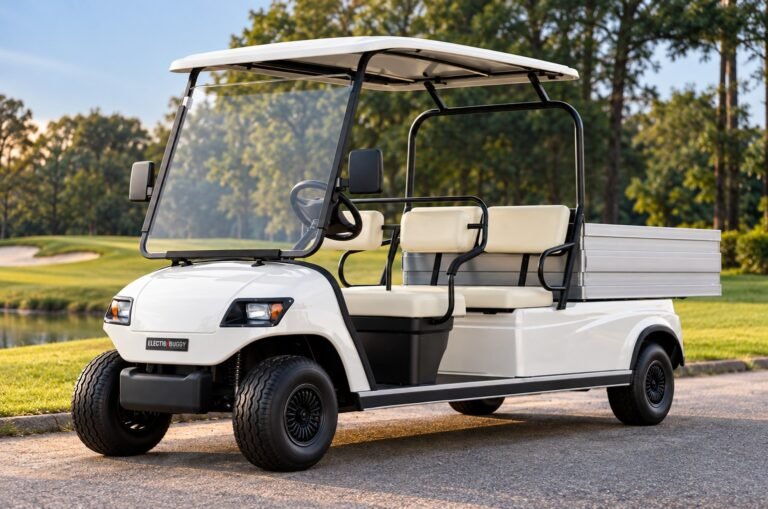
Compare the EBC Cargo 4 Open and Turfman 2000 around those tasks. Check the supplied capacities, bed dimensions and route suitability rather than treating all utility vehicles as interchangeable.
Consider loading height and access at the stores as well as the journey itself. A configuration can be suitable on the route but awkward for repeated loading by the team.
Design resident transport as a service
Passenger movement works best when residents know where to wait and what the service can provide. Select stopping places clear of through traffic and allow time for boarding. Include luggage or shopping in the capacity assessment.
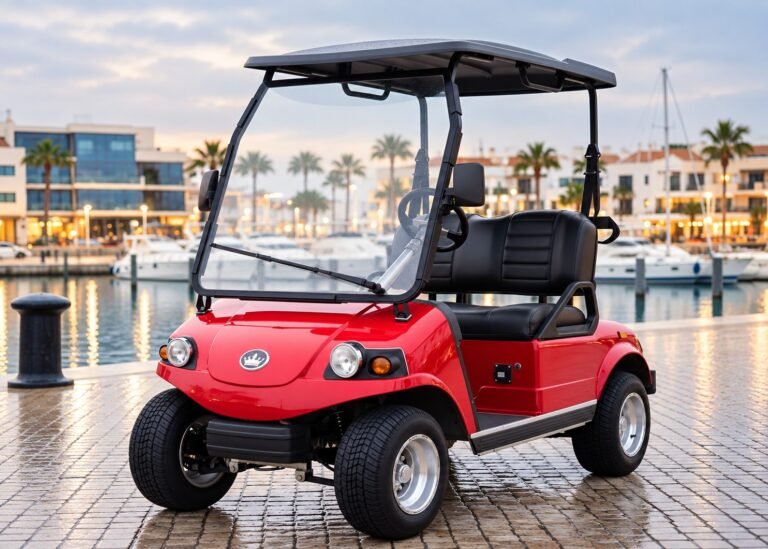
Le Innovation 4 and other passenger configurations can be discussed for this role. If wheelchair transport or assisted boarding is required, assess it specifically. An open buggy is not automatically an accessible vehicle.
A shared transport service also needs a process for overlapping requests. Decide which journeys take priority, who dispatches the vehicle and what residents should do when it is unavailable.
Check road crossings and insurance
Map every section that leaves the managed site or crosses a public road. Ask for documentary confirmation that any proposed vehicle is suitable for that use. Do not infer public-road approval from passenger capacity, equipment or appearance.
Have the insurer assess the actual activity, vehicles and drivers. Portugal’s insurance supervisor, ASF, explains that motor insurance obligations can also concern use on private ground. A gated entrance is therefore not a reason to assume the fleet is outside the insurance requirements.
Plan charging and availability together
Decide which vehicles must remain available during each shift, then place charging windows around that requirement. A qualified electrician should assess the installation for the chosen chargers and simultaneous demand.
Keep charging positions away from pedestrian bottlenecks, give each vehicle an identified space and establish who checks charge status. Ask for storage instructions if part of the fleet will be stood down in quieter periods.
Maintenance planning should include daily checks, a fault-reporting process and agreed service arrangements. Record downtime by cause so you can distinguish a vehicle problem from a charging or scheduling problem.
Prepare a clear proposal for owners
Present the proposed roles, expected workload, selected configurations and whole operating budget. Separate purchase, installation, insurance, delivery and servicing. State how the service will continue if one unit is unavailable.
Electric Buggy Company can discuss the brief through our Business & Fleets page. Request a fleet quotation with your Algarve location, route plan, tasks and operating hours.
Frequently asked questions
Can security and maintenance share one buggy?
Possibly, if their schedules and equipment needs fit. Check simultaneous demand and establish what happens when both teams need it.
Does a gated resort need to consider motor insurance?
Yes. Have the actual use assessed by the insurer. Private grounds should not be treated as an automatic exemption.
Can a passenger buggy carry maintenance equipment?
Only within its appropriate load arrangements. Tools and supplies need secure storage; spare seats are not a substitute for a suitable cargo area.
What if the route crosses a public road?
Flag that in the purchasing brief. The specific vehicle must have the approval and documentation needed for that road use.
What should the first quotation include?
Exact configurations, required equipment, delivery, applicable documentation, commercial warranty terms and servicing arrangements, plus a separate assessment of charging infrastructure.

 French
 English
 Spanish
 German
 Portuguese